
Travellers' pick, ChatGPT, Gemini
Jewish Quarter (Judería)
Historic Centre
Narrow, picturesque alleys steeped in Jewish history, boutique shops, and local restaurants.
Plan Cordoba
By MupDay - the planner that does the research for you.Directions from stop to stop included - all free.
Plan a free trip to CordobaUpdated: 2026-10-18
Cordoba, an Andalusian gem, blends Moorish, Jewish, and Christian pasts into stunning architecture and picturesque alleys. Come experience the charm of its famous patios, exquisite cuisine, and rich history.
Things to do in Cordoba include Jewish Quarter (Judería), Roman Bridge, Calleja de las Flores. Here are 15 places worth knowing, with a short note on each.
Narrow, picturesque alleys steeped in Jewish history, boutique shops, and local restaurants.
Plan Cordoba
An ancient and impressive bridge over the Guadalquivir River, ideal for a sunset stroll.
Plan Cordoba
A small, charming alley famous for its hanging flowers and a view of the Mezquita-Cathedral tower.
Plan Cordoba
A historic 14th-century synagogue, one of the few surviving in Andalusia, with stunning stucco decorations.
Plan Cordoba
A royal fortress with stunning gardens and fascinating historical tales, ideal for families.
Plan Cordoba
A unique Castilian-style square, ideal for coffee or tapas in a local atmosphere.
Plan CordobaWant all of these sorted into days?
MupDay splits them by proximity and real opening hours, with no zig-zag - directions from stop to stop included. All free.
Build an itinerary for Cordoba
Plaza de las Tendillas is a square in Córdoba, close to the site of the ancient Roman forum. It is known for its clock, which marks the quarter hours and hours with the sound of a guitar, and it also holds a monument to the Gran Capitán.
Plan Cordoba
Medina Azahara is a palace-city from the 10th century, in the foothills of the Sierra Morena just west of Córdoba. Abd ar-Rahman III, the first caliph of al-Andalus, built it, and it was the capital of the Córdoba caliphate.
Plan CordobaA fascinating museum showcasing Roman and Muslim artifacts from Cordoba, including an underground Roman theater.
Plan Cordoba
A magnificent palace renowned for its 12 charming patios, offering an aesthetic and tranquil experience.
Plan Cordoba
The Statue of Maimonides is a bronze statue of the seated scholar in Plaza de Tiberíades, in the Jewish Quarter of Córdoba, close to the synagogue. Sculptor Amadeo Ruiz Olmos made it in 1964 to honour Maimonides, the rabbi, physician and philosopher who was born in the city in the 12th century.
Plan Cordoba
Casa de Sefarad is a privately owned museum and cultural centre, opened in 2006, devoted to Sephardic culture, history and tradition. It occupies a 14th-century Jewish house in the Jewish Quarter of Córdoba, directly opposite the synagogue.
Plan Cordoba
Private interior courtyards adorned with flowers, mainly open to the public in May, a unique visual experience.
Plan Cordoba
The Monument to Juan de Mesa is a bronze and marble relief in Plaza de San Pedro in Córdoba, beside the basilica where the sculptor was baptised. Mesa, born in the city in 1583, was a Baroque sculptor known for religious images carried in Holy Week processions.
Plan Cordoba
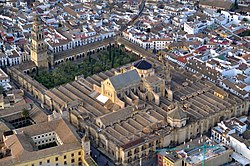
The historic centre of Córdoba is a UNESCO World Heritage Site with a wealth of monuments from Roman, Islamic and Christian times. UNESCO first inscribed the Mosque-Cathedral in 1984 and a decade later extended the listing to cover much of the old town.
Plan CordobaHere is what 3 days in Cordoba look like when the planner builds them - arriving at noon on the first day and flying home at noon on the last. Stops are grouped by proximity so no day doubles back, and the same route can be built for any length, from two days to a week.




The route assumes the first day starts at noon, after you land, and the last ends at noon, before your flight. It is an example: with your dates the planner builds a route around your landing and your flight home, real opening hours, how you get around and your own preferences.
Jewish Quarter (Judería), Roman Bridge, Calleja de las Flores, Synagogue of Cordoba, Alcázar de los Reyes Cristianos, Plaza de la Corredera and 9 more. Jewish Quarter (Judería): Narrow, picturesque alleys steeped in Jewish history, boutique shops, and local restaurants.
Day 1: Alcázar de los Reyes Cristianos, Roman Bridge, Puerta del Puente, Calleja de las Flores. Day 2: Cristo de los Faroles, Viana Palace, Patios de Córdoba (Festival dependent), Plaza de la Corredera. Day 3: Medina Azahara, Synagogue of Cordoba.
The itinerary for Cordoba runs through Historic Centre, Capuchinos, Santa Marina, Various and Jewish Quarter.
Museums worth visiting in Cordoba: Medina Azahara, Archaeological Museum of Cordoba (Historic Centre) and Casa de Sefarad.
Ready to plan Cordoba?
Build an itinerary for Cordoba