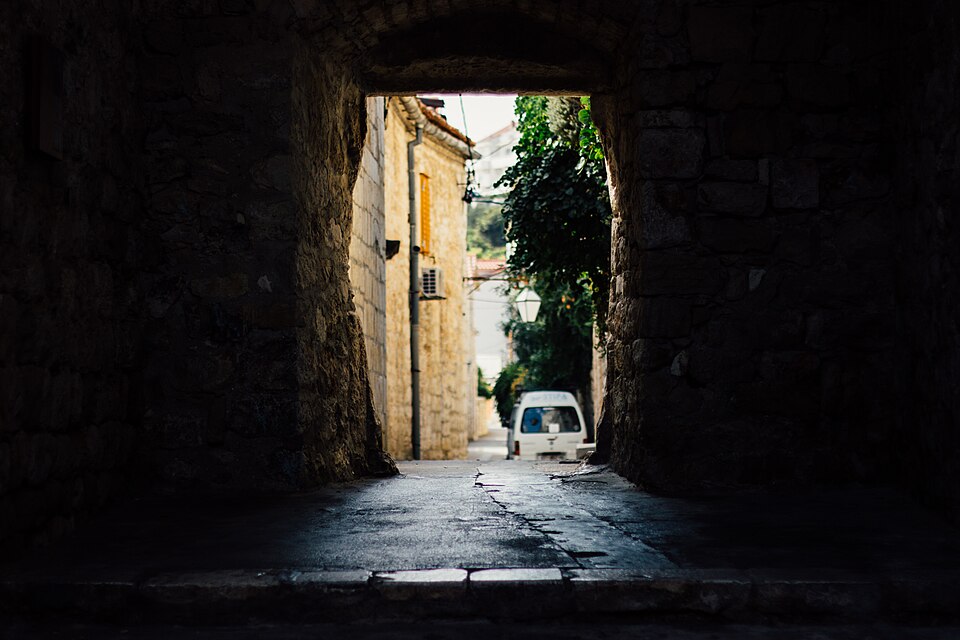
Arco di Augusto / Arc d'Auguste
Triumphal arch
An ancient Roman triumphal arch marking the city's entrance and an important historical symbol.
Plan Aosta
By MupDay - the planner that does the research for you.Directions from stop to stop included - all free.
Plan a free trip to AostaUpdated: 2026-10-18
Aosta, the capital of the Aosta Valley, is an Alpine gem rich in Roman history and breathtaking landscapes. Visit to experience a unique blend of ancient ruins, mountain culture, and exquisite cuisine.
Things to do in Aosta include Arco di Augusto / Arc d'Auguste, Plastico Porta Praetoria, Anfiteatro romano di Aosta. Here are 13 places worth knowing, with a short note on each.
An ancient Roman triumphal arch marking the city's entrance and an important historical symbol.
Plan Aosta
The Anfiteatro romano di Aosta is the Roman amphitheatre of Aosta, an ancient monument from the Roman city of Augusta Praetoria Salassorum. Its ruins are built into a medieval building, the monastery of the nuns of Saint Catherine, which now houses the Sisters of Saint Joseph.
Plan Aosta
An impressive cathedral with Romanesque and Gothic elements, showcasing valuable artworks.
Plan AostaWant all of these sorted into days?
MupDay splits them by proximity and real opening hours, with no zig-zag - directions from stop to stop included. All free.
Build an itinerary for Aosta
The remains of the Roman walls encircling the old city, offering a historical walking route.
Plan Aosta
Courmayeur is an alpine town and comune located in northern Italy, within the autonomous region of Aosta Valley. It holds immense significance as one of the two bases positioned on either side of Mont Blanc, Europe's highest mountain.
Plan Aosta
Gran Paradiso National Park is an Italian national park situated in the Graian Alps, stretching between the regions of Aosta Valley and Piedmont. The reserve is named after the prominent Gran Paradiso mountain found within its borders, and it connects directly with France's Vanoise National Park.
Plan Aosta
The impressive remains of the Roman Theatre offer a fascinating glimpse into the city's rich past.
Plan Aosta
Sarriod de la Tour Castle is a striking castle located in the town of Saint-Pierre by the Dora Baltea River, in Northwestern Italy's Aosta Valley. This historic site is highly significant as its original structure represents the typical style built between the 10th and 12th centuries, which was later greatly expanded by Jean Sarriod in 1420 and his son, Antoine, in 1478.
Plan Aosta

Sarre Castle is an impressive castle located in Sarre, Aosta Valley, Italy. This historic fortress stands as an important regional landmark and offers visitors a wonderful chance to explore its unique structure.
Plan AostaHere is what 3 days in Aosta look like when the planner builds them: stops grouped by proximity so no day doubles back, one full day at a time. The same route can be built for any length, from two days to a week.





This is an example. The planner builds a different route for your dates, real opening hours, how you get around and your own preferences.
Arco di Augusto / Arc d'Auguste, Plastico Porta Praetoria, Anfiteatro romano di Aosta, Collegiata di Sant'Orso, Aosta Cathedral, Criptoportico Forense and 7 more. Arco di Augusto / Arc d'Auguste: An ancient Roman triumphal arch marking the city's entrance and an important historical symbol.
Day 1: Aosta Cathedral, Piazza Émile Chanoux. Day 2: Chamonix Luge Alpine Coaster, Le Pas dans le Vide, Aiguille du Midi, Tunnel du Mont Blanc. Day 3: Mer de Glace, Luge Alpine Coaster.
The itinerary for Aosta runs through Aosta Centro, Chamonix and Les Pèlerins.
Ready to plan Aosta?
Build an itinerary for Aosta